A 50 by 100 plot (0.125 acres, roughly an eighth of an acre) is the single most common plot size used for bedsitter developments in Kenya right now. It’s the size you’ll find in Kitengela, Ruiru, Ongata Rongai, Kikuyu, Ruaka, Syokimau and most of the satellite towns feeding into Nairobi. Landlords like this plot size because it’s affordable to buy, easy to fence off, and big enough to fit a decent number of units without needing a lift or complicated structural work.
We’ve put up several bedsitter blocks on this exact plot size for clients at Jowach Construction, so this guide is based on actual projects, not just theory. Here’s what you need to know before you start digging.
How Many Units Fit on a 50 by 100 Plot
This depends on how many floors you go and how much space you leave for the compound, parking and setbacks required by the county. Most counties require a minimum setback from the boundary, usually 1.5 to 3 meters depending on the area and whether it’s residential or mixed-use zoning.
| Number of Floors | Units Per Floor | Total Units | Typical Compound Space Left |
|---|---|---|---|
| Ground Floor Only | 8 – 10 | 8 – 10 | Generous, room for parking |
| Ground + 1 | 8 – 10 | 16 – 20 | Moderate |
| Ground + 2 | 8 – 10 | 24 – 30 | Tight, minimal parking |
| Ground + 3 | 8 – 10 | 32 – 40 | Very tight, usually no parking |
A single bedsitter unit averages 3.5 by 4 meters internally, which comes to about 14 square meters. Add the corridor, shared walls and a small balcony where applicable, and you’re looking at roughly 18 to 20 square meters per unit including circulation space.
Most of our clients go with Ground + 2 or Ground + 3 because the return per plot improves significantly once you spread your foundation and roofing costs across more units.
Bedsitter Construction Cost Breakdown for a 50 by 100 Plot
Below is a cost estimate for a Ground + 2 development with 24 units, which is currently the most popular configuration we build. Prices reflect current material costs as of 2026.
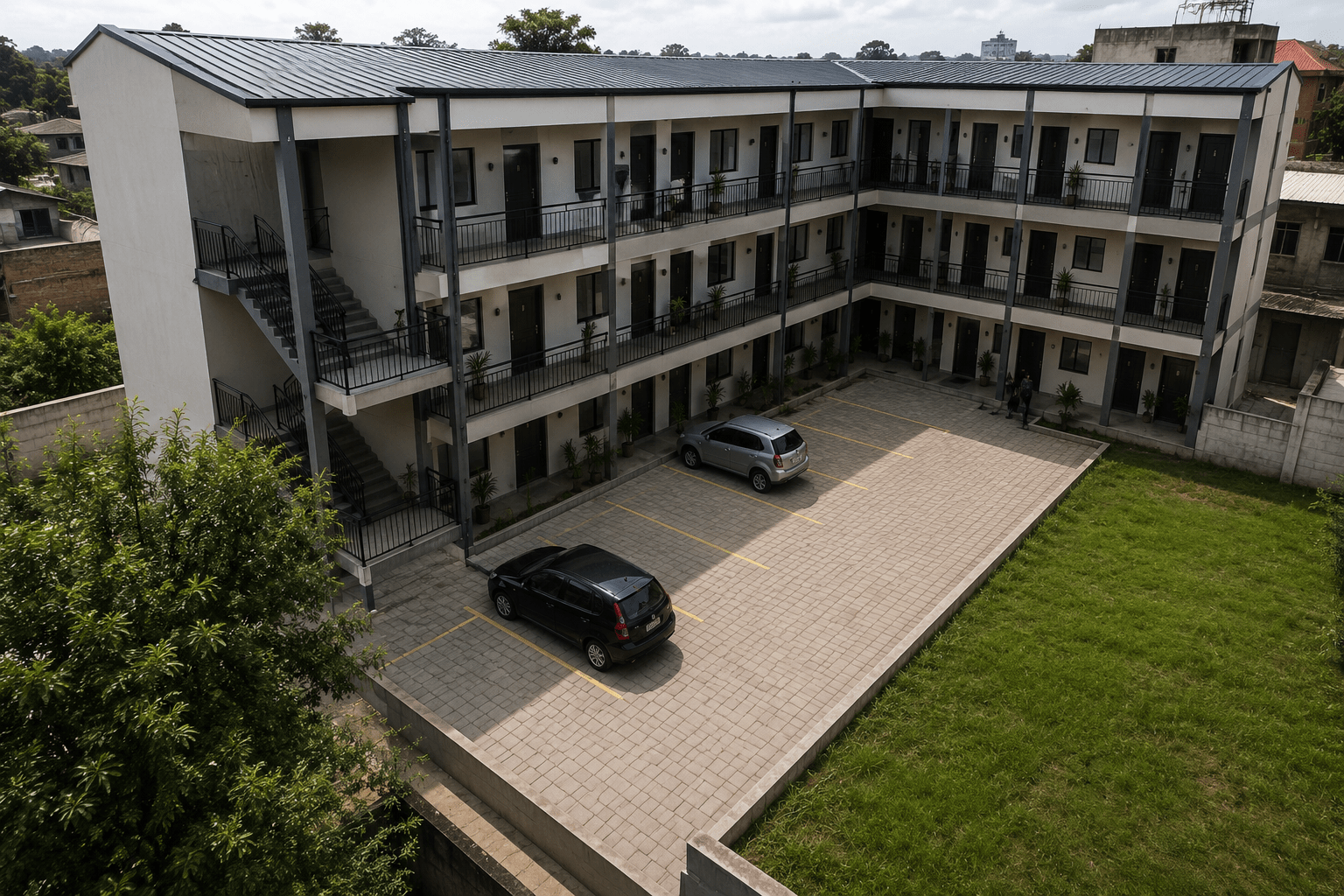
Substructure (Foundation and Groundworks)
Because you’re building multiple floors, the foundation needs to carry more load than a single-storey structure. Most soils in the Nairobi metro area take a strip foundation comfortably, though we always recommend a soil test first, especially in areas with black cotton soil like parts of Kitengela and Isinya.
- Site clearance and excavation
- Foundation concrete and hardcore filling
- Damp proof course
Cost for 24-unit block: KES 2,800,000 – 3,500,000
Superstructure (Walling, Columns, Beams)
This is where most of your budget goes on a multi-floor block. You need reinforced concrete columns and ring beams at every floor level, not just walling.
- Concrete block walling
- Reinforced concrete frame (columns, beams, slabs)
- Roofing (mabati or concrete slab roof for top floor)
Cost for 24-unit block: KES 6,500,000 – 8,200,000
Finishes
This covers everything that makes the units livable and rentable.
- Wall plastering and painting
- Floor screeding and tiling (or cement floor finish for budget units)
- Doors, windows, and burglar proofing
- Ceiling (usually left as concrete slab for lower floors to save cost)
Cost for 24-unit block: KES 3,600,000 – 4,800,000
Electrical Wiring
Each unit needs its own meter point or sub-meter, wiring, and a minimum of two sockets plus lighting points.
Cost for 24-unit block: KES 900,000 – 1,200,000
Plumbing and Drainage
Bedsitters typically share ablution blocks on each floor unless you’re building self-contained units, which cost more per unit but rent higher.
- Shared bathrooms (2-3 per floor): KES 600,000 – 900,000
- Self-contained units (private toilet/shower in each unit): add KES 150,000 – 200,000 per unit
Compound Works
- Perimeter wall or fence
- Gate
- Water tank and borehole/piping (if no county water connection)
- Parking area (if space allows)
Cost: KES 800,000 – 1,500,000 depending on whether you drill a borehole
Total Cost Summary for a 24-Unit Bedsitter Block
| Item | Low Estimate (KES) | High Estimate (KES) |
|---|---|---|
| Substructure | 2,800,000 | 3,500,000 |
| Superstructure | 6,500,000 | 8,200,000 |
| Finishes | 3,600,000 | 4,800,000 |
| Electrical | 900,000 | 1,200,000 |
| Plumbing (shared) | 600,000 | 900,000 |
| Compound works | 800,000 | 1,500,000 |
| Total | 15,200,000 | 20,100,000 |
| Cost Per Unit | 633,000 | 838,000 |
Shared bathrooms bring the cost per unit down considerably compared to self-contained units. If you want every bedsitter to have its own toilet and shower, budget an extra KES 150,000 to 200,000 per unit on top of these figures.
Self-Contained Vs Shared Bathroom Bedsitters
This is probably the most common question we get from landlords planning this kind of project, so it’s worth breaking down properly.
| Factor | Shared Bathrooms | Self-Contained |
|---|---|---|
| Cost per unit | Lower | Higher by KES 150,000-200,000 |
| Rental income | KES 4,000 – 6,500/month | KES 6,500 – 9,500/month |
| Tenant demand | Students, budget tenants | Working professionals |
| Maintenance | Higher (shared facilities wear faster) | Lower per unit |
In most satellite towns around Nairobi, self-contained units now command enough rent premium to justify the extra construction cost, especially if your target tenant is a working professional rather than a student.
What Determines Your Actual Cost
No two 50 by 100 plots cost exactly the same to build on. A few things move the number up or down:
Soil conditions — Black cotton soil needs a deeper, more reinforced foundation. This alone can add KES 300,000 to 500,000 to your substructure cost.
Access to the plot — If a lorry can’t reach your site directly and materials have to be offloaded and carried, labor costs go up.
County building requirements — Some counties now require a structural engineer’s approval and NCA registration even for small bedsitter blocks, which adds professional fees but protects you from demolition orders later.
Water source — Plots without county water connection need a borehole, which can cost KES 400,000 to 800,000 depending on depth.
Finishing choices — Ceramic tiles versus cement floors, PVC ceiling versus exposed slab, these choices alone can shift your budget by a million shillings or more across 24 units.
Rental Income Potential
Using current rental rates in growing towns around Nairobi, here’s a rough picture of what a 24-unit block can earn:
| Unit Type | Monthly Rent (KES) | 24 Units Monthly | Annual Income |
|---|---|---|---|
| Shared bathroom | 4,500 | 108,000 | 1,296,000 |
| Self-contained | 7,500 | 180,000 | 2,160,000 |
At a construction cost of around KES 17,000,000 for a self-contained block, that annual income puts your payback period at roughly 8 years, before factoring in vacancy rates and maintenance, which typically eat into the top line by 10-15% annually.
Timeline for a Ground + 2 Bedsitter Block
| Stage | Duration |
|---|---|
| Design, approvals, NCA registration | 4 – 6 weeks |
| Foundation | 4 – 5 weeks |
| Superstructure (all floors) | 10 – 14 weeks |
| Finishes | 8 – 10 weeks |
| Total | 7 – 9 months |
Why Build With Jowach Construction
Bedsitter blocks are a numbers game, every shilling you save on construction without cutting corners goes straight into your profit margin. Here’s what we bring to the table:
- Experience with multi-unit blocks — We understand load distribution, plumbing stacks and electrical layout for high-density units, not just single homes
- Accurate Bills of Quantities — You get a real number before we break ground, not a rough guess that balloons halfway through
- On-site supervision — Someone from our team is on site at every critical stage, from foundation inspection to final finishes
- Help with approvals — We assist with NCA registration and county plan approvals so you don’t get flagged during or after construction
- Diaspora support — Weekly photo and video updates for clients managing the project from outside the country
- Material sourcing — We buy in bulk across multiple projects, which often brings your material costs down compared to sourcing individually
Frequently Asked Questions
1. How many bedsitters can I fit on a 50 by 100 plot?
With a Ground + 2 development, you can comfortably fit 24 to 30 units depending on your setback requirements and whether you leave room for parking. Ground + 3 can push this to around 40 units.
2. What’s the cheapest way to build bedsitters on this plot size?
Sharing bathrooms across each floor instead of building self-contained units is the biggest single cost saver, followed by using cement floor finishes instead of tiles on lower-priority units.
3. Do I need a soil test before building?
Yes, especially for multi-floor blocks. A soil test costs a fraction of what you’d spend fixing foundation problems after the fact, and it tells us exactly what kind of foundation your plot needs.
4. Is it better to build self-contained or shared bathroom bedsitters?
It depends on your target tenant and location. Areas with more working professionals justify the extra cost of self-contained units through higher rent. Areas near colleges or with more budget-conscious tenants often do fine with shared facilities.
5. How long does county approval take for a bedsitter block?
This varies by county, but typically 3 to 6 weeks once your architectural and structural drawings are submitted. Jowach Construction handles this process for clients as part of our project management service.
6. Can I build in phases to spread out the cost?
Yes, many of our clients start with the ground floor, rent it out, then use that income to fund the next floor. We design the foundation upfront to carry the full intended height even if you’re building in phases, so you don’t run into structural problems later.
Get a Free Quote for Your Bedsitter Project
If you’ve got a 50 by 100 plot and you’re trying to figure out exactly what it’ll cost to put up a bedsitter block, get in touch and we’ll come look at the site, run the numbers, and give you a proper quotation, not a guess.
📞 Call/WhatsApp: +254 704 264302
📧 Email: Info@jowachconstuction.co.ke
🌐 Website: jowachconstruction.co.ke
Get your free site assessment today and find out exactly what your plot can earn you.