The A-frame house is one of the most recognisable home designs in the world — a steep, triangular silhouette that has charmed homeowners since the mid-20th century and is enjoying a strong revival today. Whether you’ve seen it as a cosy mountain cabin, a sleek modern retreat, or a weekend getaway surrounded by trees, the A-frame’s simple shape hides a surprisingly versatile design.
In this guide, we’ll walk through what an A-frame house actually is, its key features, the pros and cons, design ideas, and what to consider before building one — whether as a holiday cabin, a guest cottage, or a full-time home.
What Is an A-Frame House?
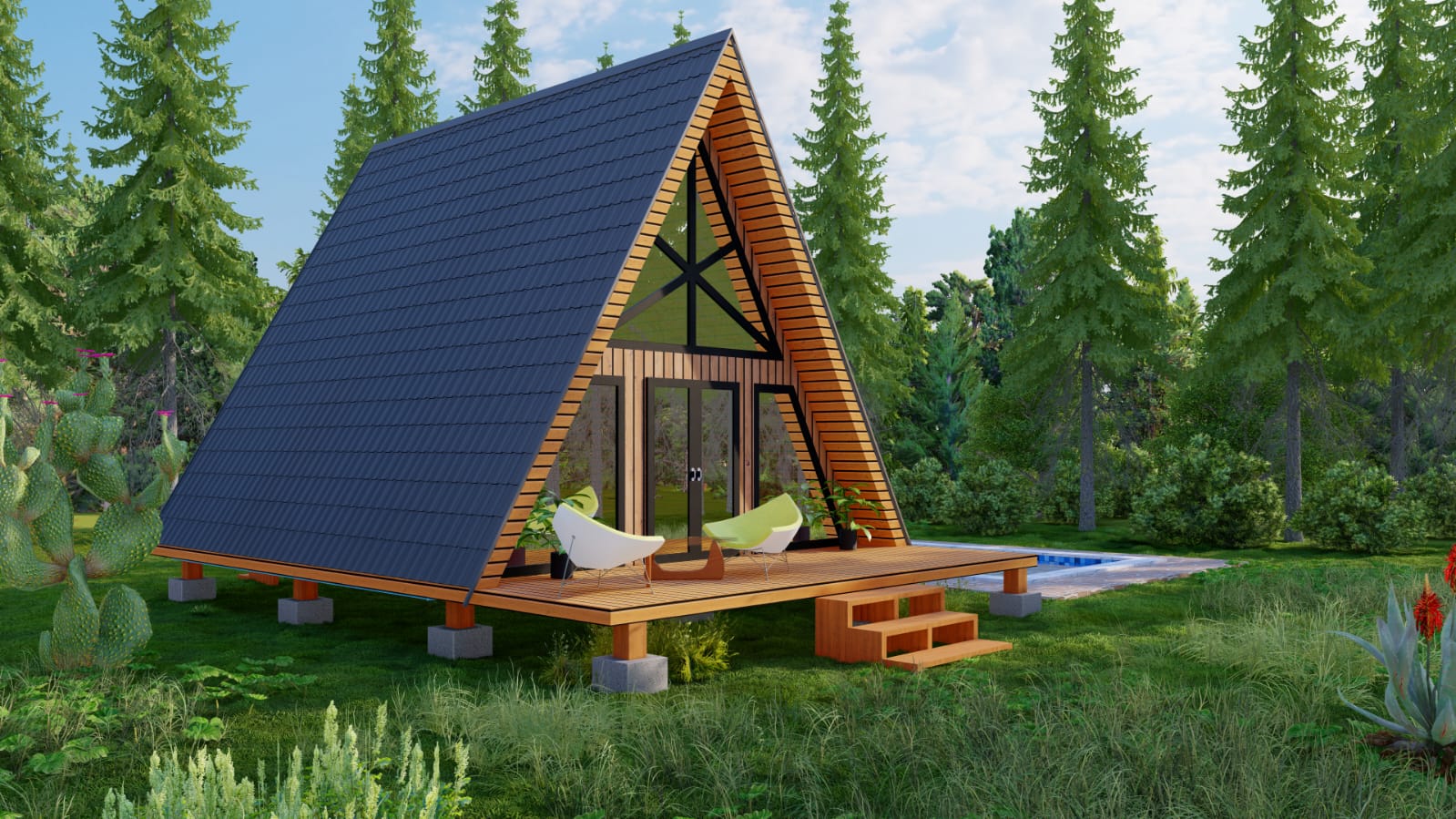
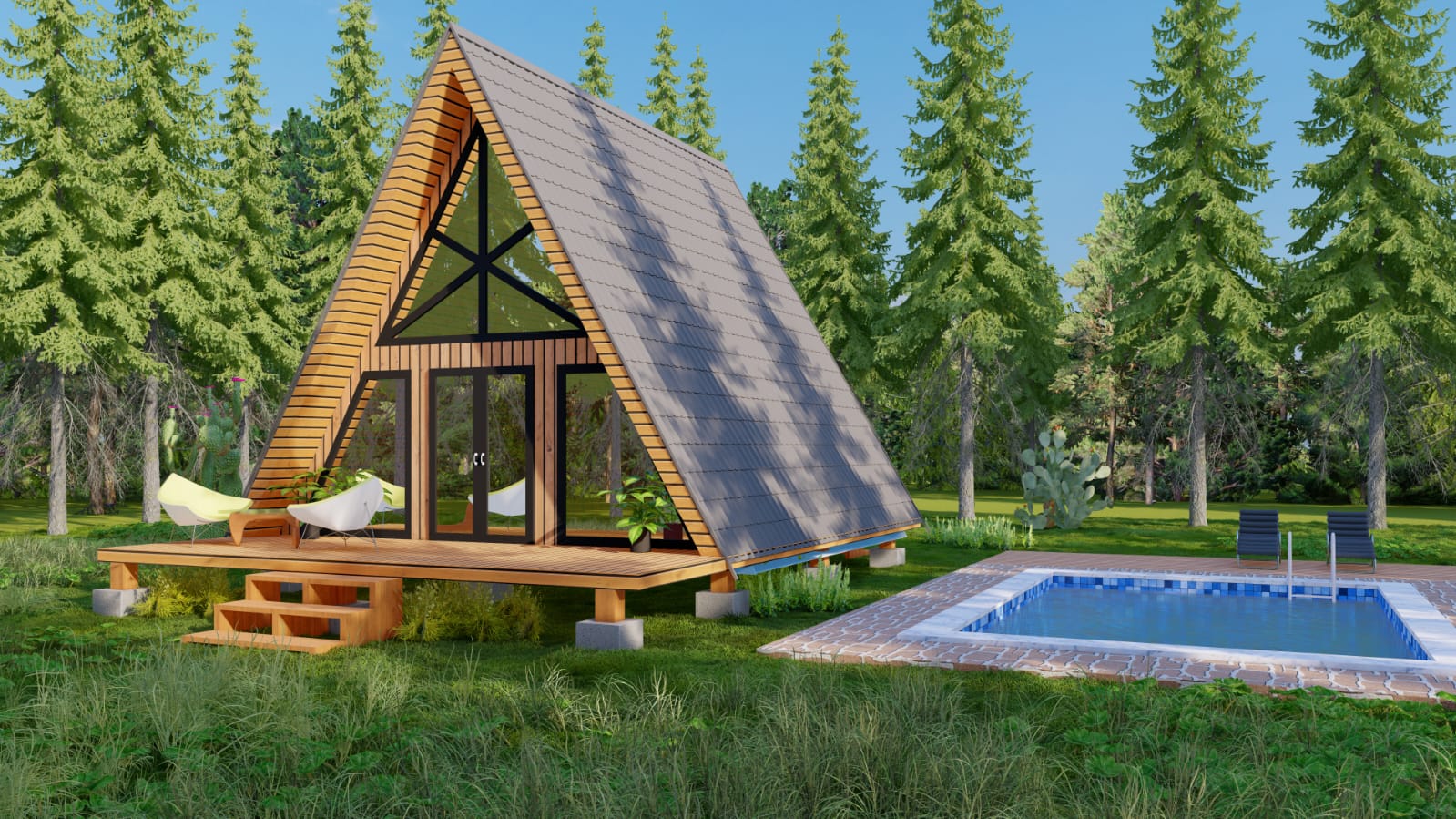
An A-frame house is a building style defined by its steep, triangular roofline that extends from near the ground on both sides up to a single peak, forming the shape of the letter “A”. Unlike conventional homes, the roof and the walls are essentially the same structure — there’s no separate vertical wall holding up a pitched roof on top.
This design typically uses angled rafters or trusses that meet at the apex, with the roof pitch often set between 45 and 60 degrees. The result is a dramatic, vaulted interior with high ceilings, an open floor plan on the ground level, and often a sleeping loft tucked into the upper portion of the triangle.
Key Features of an A-Frame House
Steeply Pitched Roof
The defining feature of any A-frame is its steep roofline, which doubles as the exterior walls. This pitch isn’t just for looks — it plays a major role in how the home performs in different climates.
Large Front and Back Windows
Because the side walls are angled and often short, A-frame designs make up for it with expansive glazing on the front and back gable ends. Floor-to-ceiling windows are a hallmark of the style, flooding the interior with natural light and creating a strong connection to the outdoors.
Open-Plan Living With a Loft
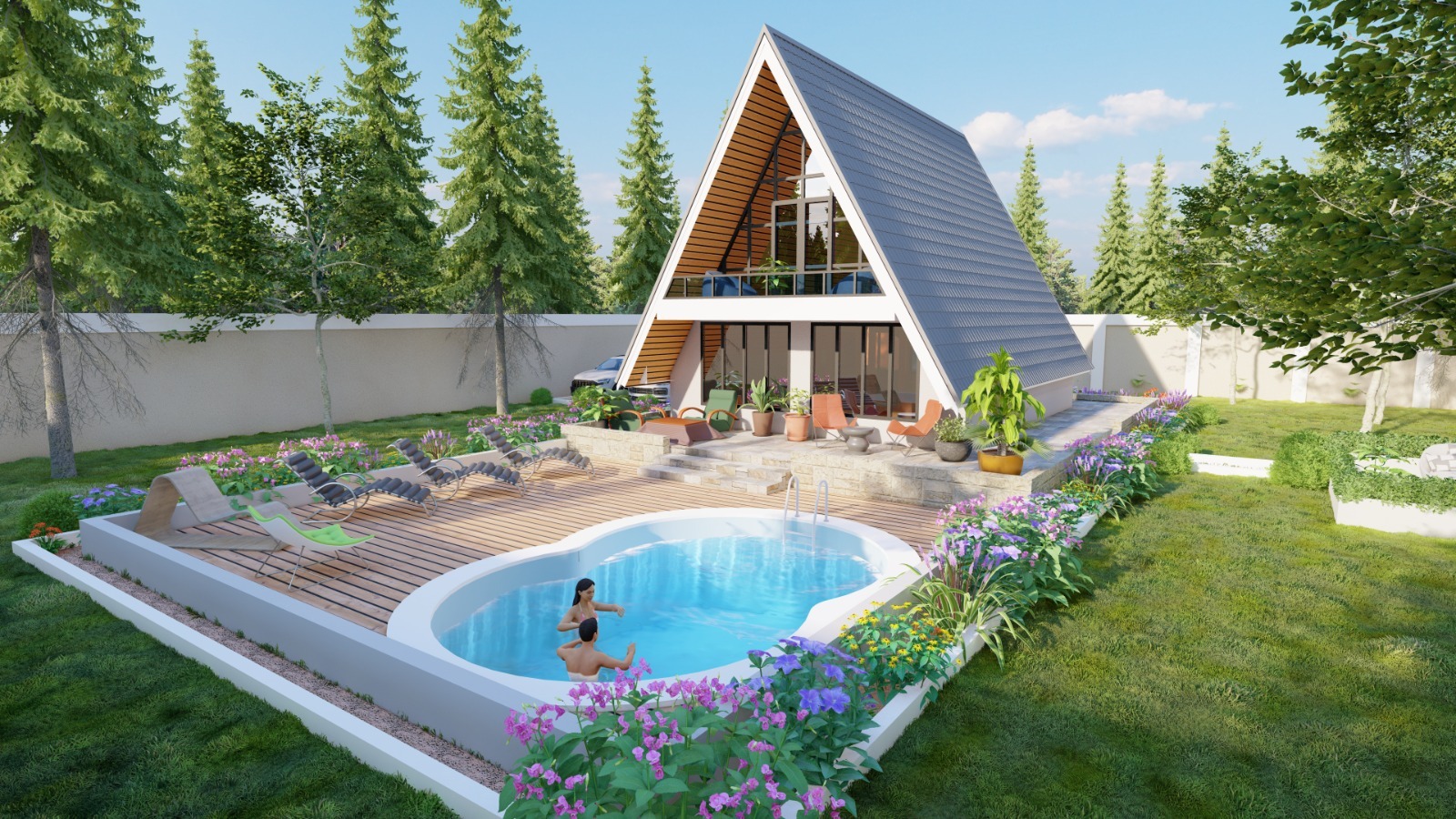
The triangular shape naturally creates a tall, open living space at ground level — usually combining the kitchen, dining, and living areas — with a loft above for sleeping or additional storage, accessed by a ladder or staircase.
Minimal Structural Complexity
Compared to homes with multiple rooflines, dormers, and wall configurations, the A-frame’s simple geometric form is relatively straightforward to design and frame, which is part of its enduring appeal for both architects and DIY builders.
Pros of an A-Frame House
1. Affordability and Simplicity
The simple geometric form of an A-frame house makes it one of the easier styles to design, engineer, and construct. Fewer structural elements generally mean a more straightforward — and often more affordable — build compared to homes with complex rooflines.
2. Abundant Natural Light
With large windows on the front and back walls (and often skylights along the roof slopes), A-frame homes tend to feel bright and spacious despite their compact footprints. Skylights are a popular addition that can make the interior feel even larger.
3. Excellent Snow and Water Shedding
The steep roof pitch allows snow and rain to slide off easily rather than accumulating, which reduces the risk of leaks and structural strain. This is part of why A-frames became so popular in snowy mountain regions in the first place.
4. Strong Connection to Nature
Large glazed walls, decks, and open layouts make A-frame houses feel deeply connected to their surroundings — ideal for forest, lakeside, or mountain settings where the view is part of the experience.
5. Distinctive, Timeless Aesthetic
Few house shapes are as instantly recognisable. Whether finished in timber cladding for a rustic cabin look or dark modern siding for a contemporary feel, the A-frame silhouette remains visually striking.
Cons of an A-Frame House
1. Limited Usable Wall Space
The sloping walls that give A-frame homes their character also reduce the amount of vertical wall space available for furniture, cabinetry, and storage — especially on upper floors near the eaves.
2. Inflexible Floor Plan
Because the shape of the house is so closely tied to its structure, it’s difficult to significantly alter the layout later. Expanding an A-frame typically requires separate additions rather than simple internal reconfiguration.
3. Insulation and Energy Efficiency Challenges
The large surface area of sloped roof/wall combined with extensive glazing can make temperature control more challenging without careful insulation, glazing choices, and ventilation planning.
4. Reduced Headroom Near the Walls
The steep angles mean that headroom decreases quickly as you move away from the centre of the floor plan, which can limit how furniture and fixtures are arranged, particularly in loft areas.
Tips for Designing and Building an A-Frame House
1. Consider Elevating the Structure
Raising the house off its foundation can create valuable storage space underneath — useful for an A-frame, which can be short on conventional storage due to its angled walls. Encasing this space in concrete can also make it weatherproof.
2. Blend Indoor and Outdoor Living
Take advantage of the A-frame’s connection to nature by adding decks on either side of the structure, or incorporating outdoor features like a fire pit or seating area that extend the living space beyond the walls.
3. Prioritise Functional Furniture and Storage
Because wall space is limited, built-in or custom furniture designed to fit the home’s angles can turn a potential drawback into a unique design feature — think window seats, built-in shelving along low walls, and multi-purpose loft furniture.
4. Plan for Insulation Early
Given the large roof/wall surface and glazing, insulation strategy should be considered from the earliest design stages — not added as an afterthought — to ensure the home is comfortable in all seasons.
5. Think About Ventilation and Climate Control
Depending on your climate, consider mechanical ventilation systems and appropriately sized heating or cooling solutions. Shading devices for large windows can also help manage heat gain in warmer months.
6. Evaluate Your Site Conditions
Soil conditions, drainage, and foundation type should be assessed before finalising your design — especially if you’re considering a basement, walk-out lower level, or building on a sloped lot.
Who Is an A-Frame House Best Suited For?
The A-frame house style works particularly well for:
- Holiday homes and weekend cabins in scenic, natural settings
- Guest cottages or secondary dwellings on larger properties
- Anyone drawn to a minimalist, open-plan living style
- Sites in areas with heavy rainfall or snowfall, thanks to the roof’s shedding ability
- Buyers and builders looking for a distinctive design that stands apart from conventional homes
It may be less suited to households needing maximum storage, multiple separate bedrooms on one level, or significant future flexibility in the floor plan.
A-Frame Houses Around the World
While A-frame homes are strongly associated with mid-century American ski lodges and mountain cabins, the design has found new popularity globally as a vacation rental style, a compact full-time residence, and a striking architectural statement in both rural and semi-rural settings. Builders are increasingly adapting the classic A-frame silhouette to milder climates and modern materials, proving that the style’s appeal goes well beyond its snowy origins.
Working With a Professional Builder
While the A-frame’s geometry looks simple on paper, getting the structural details, insulation, glazing, and finishes right requires careful planning and experienced execution. A professional design and construction team can help you adapt the classic A-frame concept to your specific site, climate, and lifestyle needs — from initial concept drawings through to the finished build.
At Jowach Construction, we work with clients to bring distinctive home designs — including A-frame and other modern styles — to life, with professional site assessments, design input, and construction management from start to finish.
Interested in building something different? Get in touch with Jowach Construction to discuss your A-frame house idea.
📞 Call/WhatsApp: +254 704 264302 🌐 Visit: jowachconstruction.co.ke
Final Thoughts
The A-frame house remains one of the most enduring and distinctive home designs available — combining structural simplicity, natural light, excellent weather performance, and a striking aesthetic. While it comes with trade-offs around wall space and layout flexibility, thoughtful design can turn these challenges into unique features that make an A-frame home truly memorable.
Whether you’re dreaming of a forest cabin retreat or a modern statement home, the A-frame’s timeless triangular form continues to prove that good design doesn’t have to be complicated.
Frequently Asked Questions
What is an A-frame house? An A-frame house is a home style characterised by a steep, triangular roofline that extends from near the ground on both sides up to a single peak, with the roof and walls forming a single structure shaped like the letter “A”.
What are the main advantages of an A-frame house? The main advantages include affordability and simple construction, abundant natural light from large windows, excellent snow and rain shedding due to the steep roof, and a strong connection to natural surroundings.
What are the disadvantages of an A-frame house? The main disadvantages are limited usable wall space due to sloping walls, an inflexible floor plan that’s difficult to alter later, reduced headroom away from the centre of the home, and potential insulation and energy efficiency challenges.
Is an A-frame house good for storage? A-frame houses can be short on conventional storage due to their angled walls. This can be addressed by elevating the structure to create storage space underneath, or by using custom-built furniture designed to fit the home’s angles.
What roof pitch is typical for an A-frame house? A-frame houses typically have a roof pitch between 45 and 60 degrees, often forming close to an equilateral triangle, which helps with structural strength and shedding snow and rain.
Can I build a modern A-frame house? Yes. While A-frames are traditionally associated with rustic timber cabins, the same triangular form can be finished with modern materials and dark cladding for a sleek, contemporary look, and adapted with the help of a professional builder for your specific site and climate.